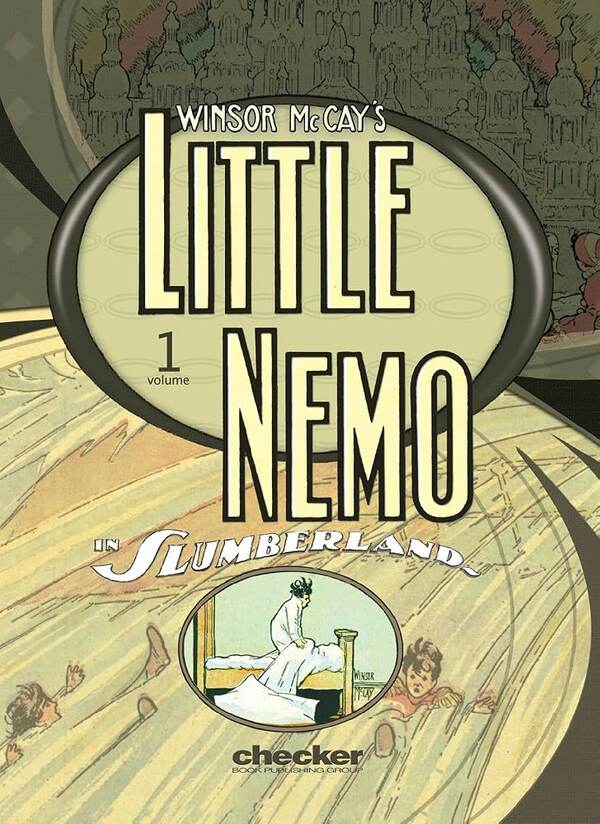
Little Nemo in Slumberland
Winsor McCay
Each Sunday page opens a dream and closes at the edge of waking.
Overview
Winsor McCay’s Nemo travels through Slumberland in elaborate nightly adventures. The dream can grow, change direction or collapse suddenly when Nemo wakes.
The strip first appeared in the New York Herald in October 1905. Its recurring premise gave McCay room to build new visual worlds week after week.
Why It Matters
Little Nemo demonstrates how a comics page can control time as well as space. The reader’s eye follows a dream through panels whose size and arrangement change with its rhythm.
Its historical importance lies in that sustained experiment with the full newspaper page, where visual architecture becomes part of the plot.
Genre & Themes
This is dream fantasy: impossible places obey temporary rules that can shift without warning. Nemo is a visitor rather than a conqueror, and the central event is often the experience of seeing.
Waking gives each episode a finish while leaving the imaginative journey open.
Art & Visual Identity
McCay’s detailed architecture and changing panel shapes let scale expand or contract within one page. Decorative patterns can become paths for the reader’s eye.
The art makes each transformation visible rather than merely describing it.
Read This If You Like
- Dream journeys
- Early newspaper comics
- Inventive page layouts
- Surreal adventure