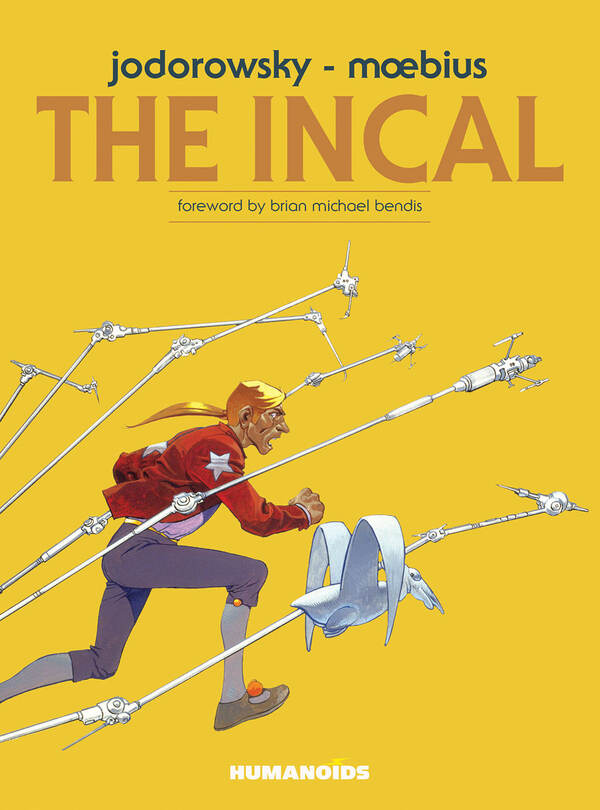
The Incal
Written by Alejandro Jodorowsky. Art by Mœbius (Jean Giraud).
A shabby detective catches a cosmic secret, and the universe refuses to let him put it down.
Overview
John Difool is a low-class private detective in a decaying, stratified future city. A coveted object called the Incal lands in his possession, making him the target of powers far beyond his street-level competence. Alejandro Jodorowsky and Mœbius send this reluctant, frequently self-serving protagonist from urban squalor into a struggle that reaches across the cosmos. The book keeps the comedy of Difool's panic in view even as its stakes grow vast.
First begun in 1980 and issued as six French albums between 1981 and 1988, The Incal is the original Jodorowsky–Mœbius story, rather than one of the later prequels or sequels. Its movement from detective trouble to mystical space opera is part of its design: each apparent answer opens onto a larger conflict, while Difool remains stubbornly, awkwardly human.
Why It Matters
The Incal helped establish a world that Jodorowsky and other artists would revisit in works including Before the Incal, The Metabarons, and The Technopriests. Humanoids' own catalog presents the original as the starting point for that expanding body of stories. Its long life in translation and collected editions also shows how far this French-language serial traveled beyond its initial publication.
Its lasting appeal is more specific than scale. Difool's unheroic reactions give the cosmic spectacle a comic counterweight, and the story makes room for satire alongside its spiritual ambitions. The plot can be deliberately dizzying, but the collision of low-life farce and metaphysical quest gives the book a character that a tidier adventure would lose.
The Science Fiction
The Incal is both a hunted object and a source of questions about what power means. Political and religious authorities pursue it in a world where technology, hierarchy, and belief are tightly entangled. Difool's journey keeps shifting the frame: a dispute over possession becomes a confrontation with institutions and, eventually, with the scale of consciousness itself.
That mixture makes the future feel unstable rather than neatly explained. The city shaft sorts people vertically; its depth turns social rank into architecture. Farther out, Jodorowsky treats space travel and strange beings as gateways to spiritual speculation. The genre machinery creates momentum, while the mystical language keeps asking what its frightened detective might become.
Art & Visual Identity
Mœbius gives the opening city a dizzying sense of depth: Difool's fall through its layers makes the setting legible as both a physical place and a social order. His clean, controlled line can hold crowded machinery, eccentric bodies, and immense open spaces in the same visual world. That clarity lets the story change register quickly without losing its reader.
Faces matter as much as spectacle. Mœbius Production notes how Difool's expression shifts with fear, anger, and moments of radiance; the art refuses to let him become a fixed heroic emblem. Color is also part of the work's identity. The English collections have not always used the same palette, and Jodorowsky has publicly favored the original colors over later recoloring. Readers comparing editions are therefore seeing different presentations of the same drawings.
Read This If You Like
- Cosmic quests led by unlikely heroes
- Dystopian cities with visible class divisions
- Space opera mixed with satire and mysticism
- Precise, imaginative European comics art