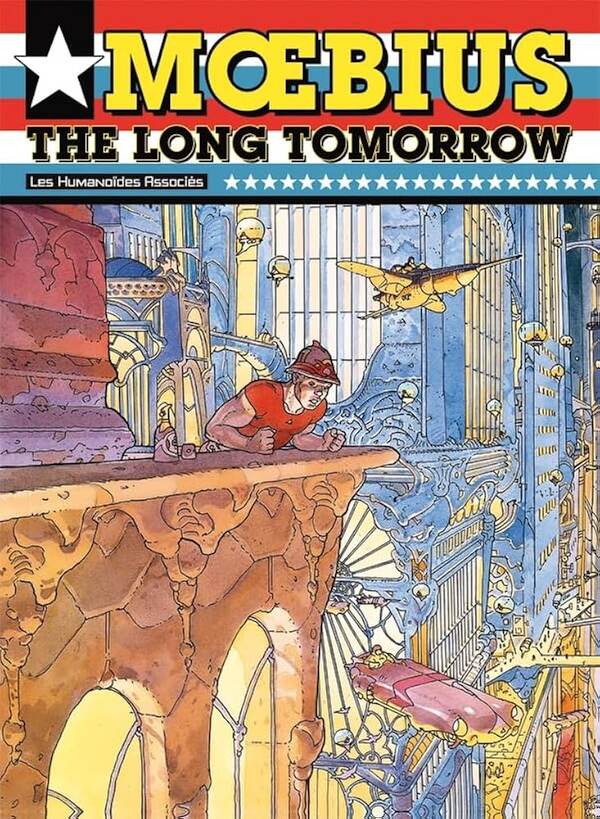
The Long Tomorrow
Written by Dan O'Bannon. Art by Mœbius.
A private-eye story descends into a future city and finds a new look for an old kind of mystery.
Overview
Written by Dan O'Bannon and illustrated by Mœbius, The Long Tomorrow is a short science-fiction comic first serialized in two parts in the French magazine Métal Hurlant in 1976. It borrows the hard-boiled detective's movement through danger and corruption, then relocates it to a densely imagined future.
Its brevity is part of its force. The story does not need a complete history of its setting; streets, rooms, and machines imply a wider world around the case. The detective plot gives readers a familiar route through unfamiliar architecture.
Why It Matters
ACMI identifies the comic's visual design as influential on later screen science fiction, citing films including Tron, Alien, and The Abyss. That documented design legacy should be separated from the larger claim that one short comic invented cyberpunk. What can be seen directly is a compelling fusion of future technology with noir's crowded, morally uneasy city.
The collaboration also shows what Métal Hurlant offered in the 1970s: room for a compact experiment that could look unlike conventional adventure comics. O'Bannon supplies the genre framework, while Mœbius makes the future feel specific enough to outlive the mystery's final turn.
The Science Fiction
The central speculative move is environmental. This future is not explained through a technical manual; it is encountered as the detective moves through it. Buildings and devices make the city both a working place and a maze.
Noir supplies the other half of the design. A private investigator expects secrets, compromised clients, and trouble behind ordinary doors. The future setting enlarges those expectations, turning a familiar investigation into a tour of a society whose scale and machinery exceed the detective's control.
Art & Visual Identity
Mœbius's detailed urban drawing gives the setting layers that can be read at a glance or explored slowly. Mechanical forms, signs, and stacked spaces suggest activity beyond the plot. The art lets a small human figure move through a city that seems to continue beyond the frame.
That contrast between legible action and abundant background detail is the work's defining visual pleasure. It makes the case easy to follow while leaving the world open. The reader can finish the mystery and still feel there are countless other stories in those streets.
Read This If You Like
- Noir detectives in speculative cities
- Compact, visually dense science fiction
- Mœbius's 1970s experiments
- Urban futures with lived-in detail