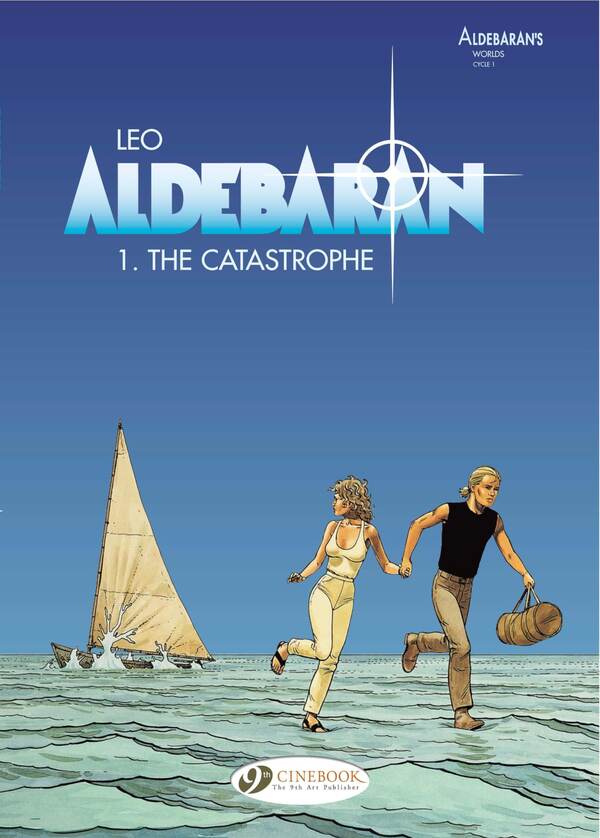
The Worlds of Aldebaran
Written by Leo (Luiz Eduardo de Oliveira). Art by Leo.
On Leo's distant planets, the most surprising discoveries are often alive.
Overview
Leo's The Worlds of Aldebaran began in 1994 and has expanded across several cycles of planetary adventure. Its stories follow human settlers and travelers on worlds whose plants and animals often resist easy classification. Kim Keller is a recurring central figure whose journeys connect the expanding setting.
The series does not treat a planet as a blank stage for human action. Strange life forms can be beautiful, dangerous, or difficult to understand, and a discovery may change what the characters thought they knew about the world around them.
Why It Matters
Dargaud describes the saga as combining science fiction with complex human relationships and an unusually large invented bestiary. That emphasis makes ecology a source of narrative movement rather than a decorative catalog of monsters.
Its multi-cycle structure lets the setting grow by comparison. Aldebaran, Betelgeuse, and Antares have different living systems, encouraging the reader to think about exploration as sustained observation rather than a brief conquest.
The Science Fiction
Alien biology is the series' principal speculative engine. Creatures have forms and behaviors that invite study, and the humans' incomplete knowledge creates both wonder and risk.
The long view of settlement adds a social question: how should people live on worlds that they do not fully understand? The stories can turn a scientific mystery into a practical decision about movement, safety, and coexistence.
Art & Visual Identity
Leo gives unfamiliar organisms distinct silhouettes and environments. The creatures look like parts of living systems, not isolated surprises. Dargaud's bestiary project highlights how much descriptive care has gone into that aspect of the work.
The art balances landscape with close human encounters. Expansive views establish a planet's difference, while faces and bodies show how curiosity, fear, and attachment shape the response to it.
Read This If You Like
- Alien ecology and invented bestiaries
- Planetary exploration
- Long-running European science fiction
- Human drama inside unfamiliar environments