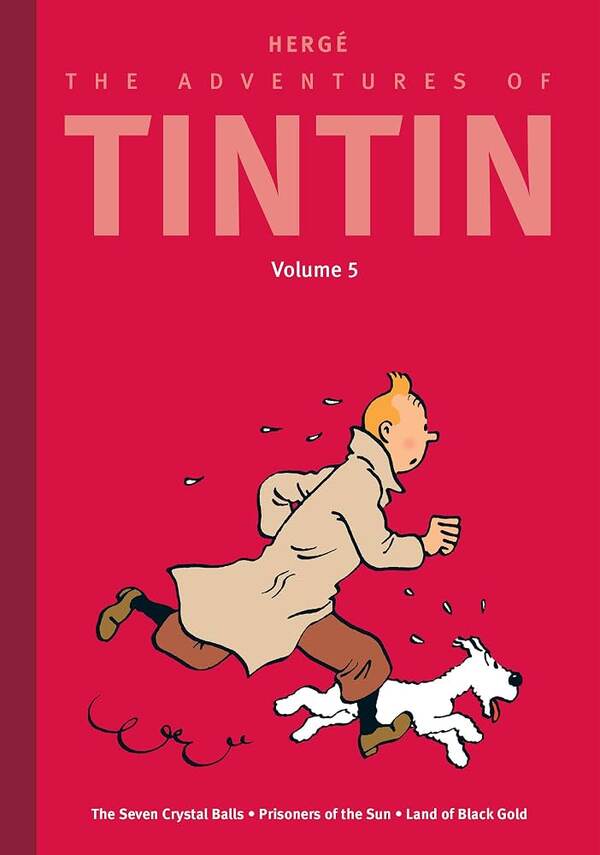
The Adventures of Tintin
Hergé
A young reporter follows clues across a world of conspiracies and discoveries.
Overview
Tintin first appeared in Le Petit Vingtième on 10 January 1929. With his dog Snowy, he travels from one investigation to the next, later joined by an expanding cast of allies.
The series changes considerably over its run. Early adventures can be blunt products of their period; later albums develop more intricate mysteries and a richer group dynamic.
Why It Matters
Hergé built a model of clear, sustained adventure storytelling in the Franco-Belgian album. His scenes make travel, pursuit and discovery easy to follow.
The work also merits critical reading for dated colonial and political assumptions in some early volumes. Its historical importance does not erase that context.
Genre & Themes
The genre is adventure and mystery, with some stories reaching toward science fiction. Investigation gives the series its basic motion: a clue opens onto a larger system of people and places.
Friendship and loyalty eventually become as important as solving the case.
Art & Visual Identity
Hergé’s clean outlines, careful staging and legible environments keep action moving across varied locations. Later pages show especially disciplined control of props, movement and visual continuity.
The clarity makes complicated plots accessible without flattening their settings.
Read This If You Like
- Global adventure stories
- Mysteries with recurring companions
- Franco-Belgian albums
- Clear visual storytelling